
The Science of Skin Aging
Skin longevity and skin aging dynamics. What I am working toward.
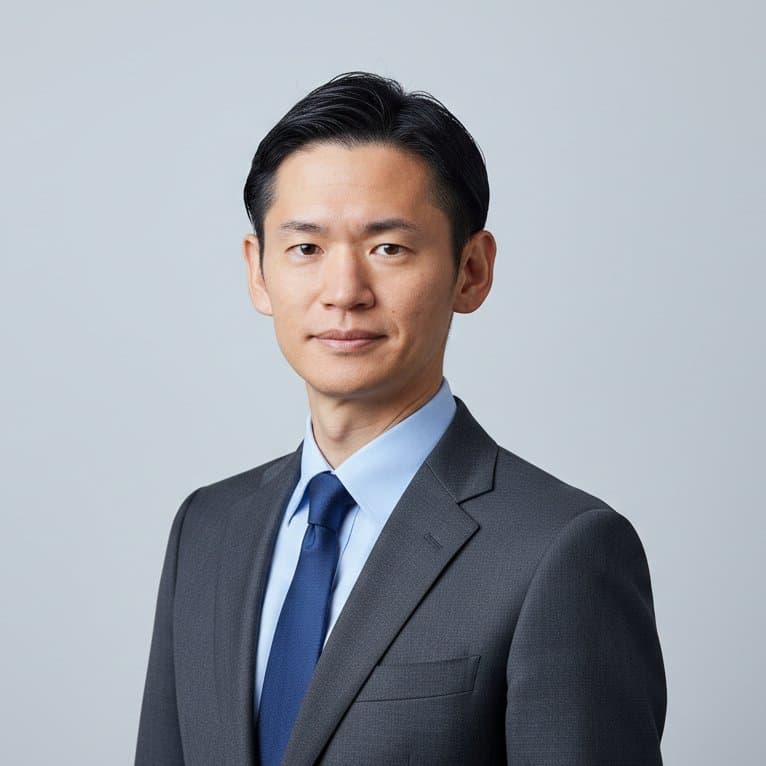
Takeshi Matsushita
April 2025
Skin longevity has become a widely used phrase over the past few years — the science of maintaining healthy skin for longer. Shiseido, L'Oréal, and Estée Lauder are all using this language now.
I think this is a good development. The shift from "hiding aging" to "understanding and addressing aging" is the right direction for the industry.
But there is one thing I find unsatisfying.
No one seems to be genuinely pursuing the question of what causes skin to age in the first place.
Aging is not a phenomenon — it is a dynamic
I use the term skin aging dynamics. Rather than viewing aging as a static phenomenon, it means treating it as a moving process — multiple pathways advancing in cascade.
Concretely: UV exposure and stress generate reactive oxygen species (ROS). ROS trigger chronic inflammation. Inflammation activates MMP, the enzyme that breaks down collagen. Collagen degrades, firmness is lost. In parallel, excess sugar forms AGEs (advanced glycation end-products), further deteriorating collagen. The barrier collapses, external irritants penetrate directly, inflammation accelerates.
ROS → Inflammation → MMP → Collagen breakdown → AGEs accumulation. This is the cascade of skin aging dynamics. Treating only the downstream effects does not stop what is happening upstream.
This cascade has speed. It has mutual amplification between pathways. Some pathways advance before others. The pattern differs from person to person. The reason the same skin longevity approach does not produce the same results is that aging dynamics vary individually.
What comes after skin longevity
If skin longevity — the science of long-lasting healthy skin — is a philosophy of prevention and maintenance, what I am working on is the step before that.
First: know which aging pathways are advancing and how far. Then: determine the intervention approach. Not a single ingredient for a single pathway, but simultaneous action across all six.
This is the thinking behind REGINA's FABIRS framework: F (Fibroblast), A (Anti-Glycation), B (Barrier), I (Inflammation), R (Antioxidation), S (Senescent Cell Clearance). S is a hub that branches into the other axes — topical care covers the local level, inner care the systemic circulation. Achieving real skin longevity requires addressing all six pathways together.
Why major brands focus on one ingredient
This is a structural observation, not a criticism.
Major brands concentrate advertising spend to build recognition — "this brand means this ingredient." That is correct as marketing. But from the perspective of aging dynamics, it answers only half the problem.
Controlling ROS alone does not stop inflammation. Suppressing inflammation alone does not stop glycation. Repairing the barrier alone does not interrupt the upstream cascade. Genuine skin longevity requires simultaneous action across multiple pathways.
Investing everything in raw materials rather than advertising is not a philosophical choice. It is a structural necessity. Formulating for six pathways simultaneously drives up ingredient costs first.
What CHROSNOF calculates
CHROSNOF is skin aging dynamics described as a mathematical model. Using ODE (ordinary differential equations), PDE (partial differential equations), and PINNs (physics-informed neural networks), it quantifies the state of all six pathways.
Seeing the state through calculation, not intuition. That was the starting point.
Skin longevity will only become more important as a field. But achieving the goal of long-lasting health requires first knowing precisely what is happening now. Skin aging dynamics is the language for that.
REGINA LOCUS LVXL designs its products in that language.
The effect of topical application on senescent cells in human skin is an area where verification is still in progress. CHROSNOF treats S as an axis within its calculations and makes no numerical claim regarding amounts removed or states reached.
More from Journal
The Essence of Aging Care
March 2024Why your aging care is not working.
Using expensive products and seeing no change. The reason is not insufficient effort — it is a direction problem.
Scientific Evidence
February 2024Young skin changes your life. Three scientifically proven facts.
Aging care is not a beauty topic. It is a life investment that affects likeability, income, and relationships.
Ingredients & Formulation
January 2024Oxidation is the origin of aging. Why I formulated fullerene at 10%.
The mechanism by which reactive oxygen species cause aging, and why I formulated fullerene at world-class concentration.